 Español
  English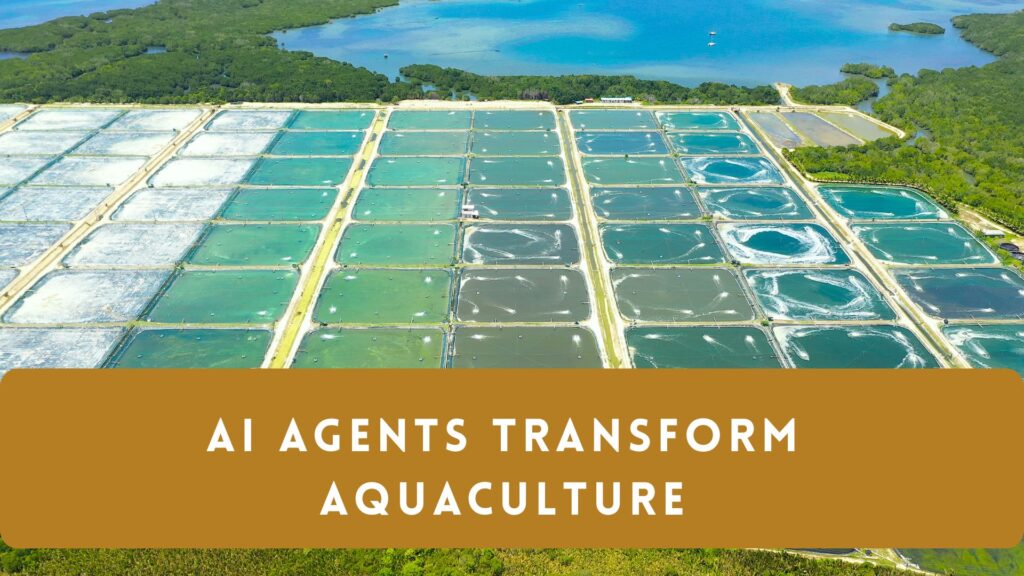
How AI Agents Transform Aquaculture: Smart Waterwheel Control, Energy Saving, and Autonomous Farm Management
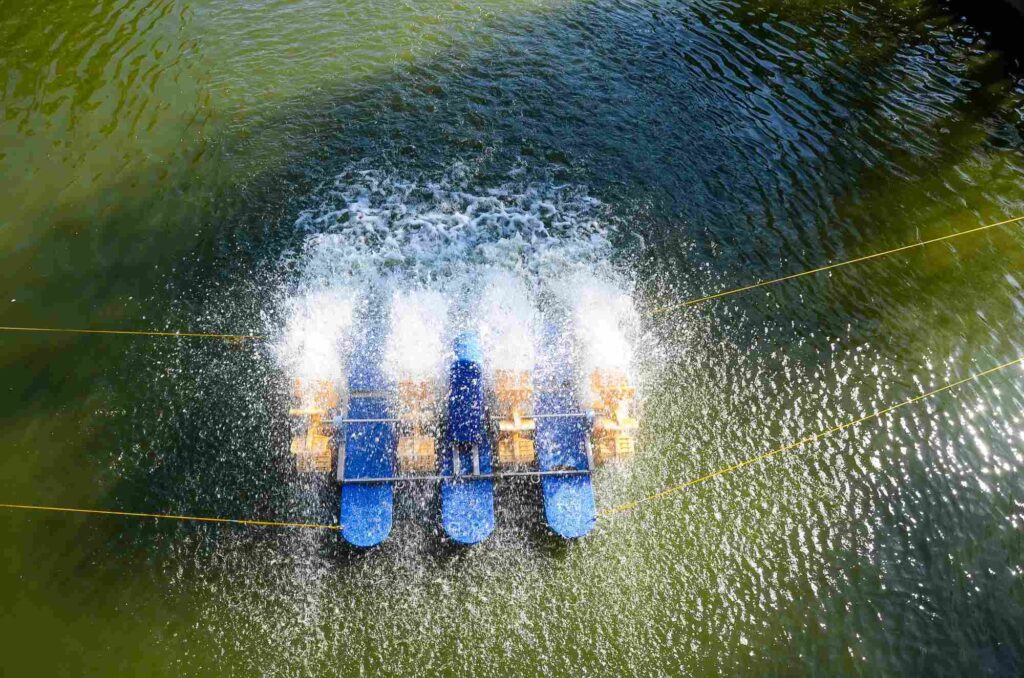
AI Agents Transform Aquaculture AI Agents (Artificial Intelligence Agents) for managing waterwheels and aquaculture facilities represent a major shift from passive automation to proactive, autonomous decision‑making.
Traditional AIoT systems can only perform basic tasks such as triggering alarms when sensor values exceed thresholds or turning waterwheels on and off at fixed schedules. In contrast, AI Agents possess autonomous capabilities in perception, reasoning, decision‑making, and execution. Acting like a 24/7 digital aquaculture expert, they can independently control equipment based on real‑time environmental changes—achieving energy savings, disaster prevention, and improved production efficiency.
Strategy 1: Dynamic Energy Saving & Disaster Prevention for Waterwheel Aeration
Multi‑Dimensional Reasoning and Dynamic Switching
Instead of relying on a single dissolved oxygen sensor, AI Agents integrate multiple data sources—weather forecasts, solar radiation, air pressure, water temperature, and historical climate tolerance of fish and shrimp.
- Daytime: When photosynthesis increases dissolved oxygen, the Agent proactively shuts down some waterwheels to save energy.
- Nighttime or Pre‑Rain: Before heavy rain or during high‑risk “pond overflow” conditions (calm, humid weather), the Agent activates waterwheels in batches to stabilize oxygen levels.
Optimized Variable‑Frequency Waterwheel Speed
Rather than simply switching waterwheels on or off, the AI Agent fine‑tunes the RPM of variable‑frequency motors based on convection needs. This maintains safe dissolved oxygen levels while reducing electricity consumption—important because electricity typically accounts for over 30% of aquaculture operating costs.
Autonomous Equipment Health Diagnosis
By analyzing motor current, voltage, and vibration patterns, the Agent can detect early signs of mechanical issues such as weed entanglement or bearing wear. Before equipment fails, it automatically switches to a backup waterwheel and sends a maintenance work order to the farm manager.
Strategy 2: Precise Linkage for Smart Feeding Systems
Appetite Recognition & Waterwheel Coordination
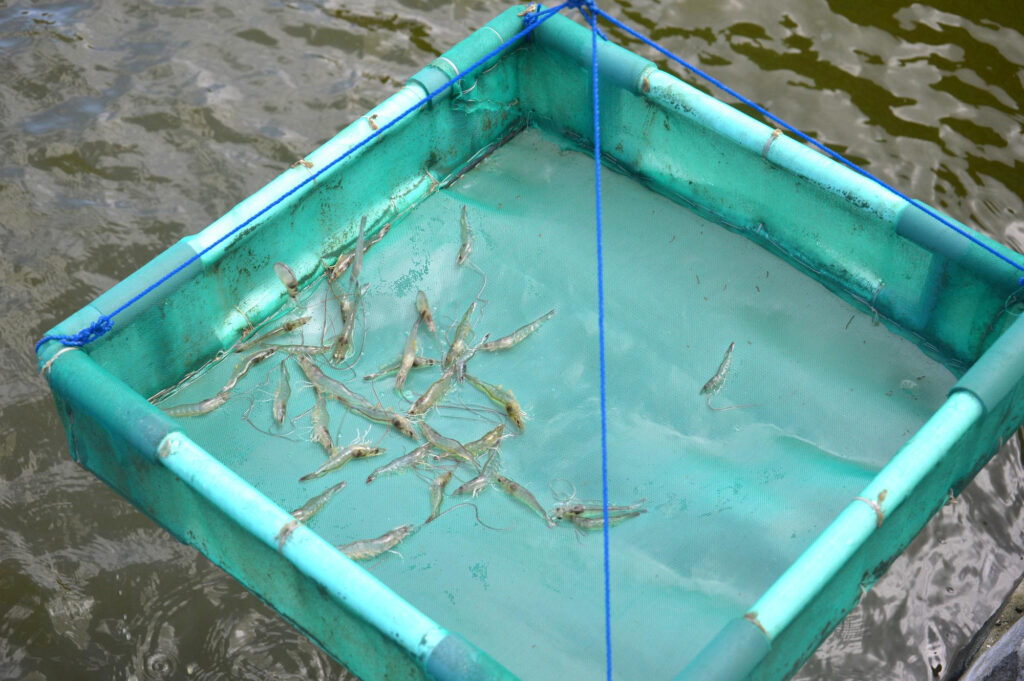
Using underwater or surface computer vision, the AI Agent evaluates real‑time feeding behavior:
- When fish and shrimp show strong feeding activity, the feeder extends operation.
- When uneaten feed increases or appetite drops, feeding stops immediately, and the waterwheel in the feeding zone activates to disperse leftover feed—preventing localized water quality deterioration.
Biomass Estimation & Formula Adjustment
By cross‑calculating feed input, growth curves, and body size changes, the Agent autonomously adjusts daily feed volume and frequency. This achieves precise feeding and reduces feed waste by 15%–30%.
Strategy 3: Multi‑Machine Coordination for Water Quality Stabilization
Cross‑Facility Microclimate Regulation
In indoor or greenhouse aquaculture systems, the AI Agent can simultaneously control waterwheels, pumps, heaters, shade nets, and inlet/outlet valves. For example, during extreme summer heat:
- Shade nets deploy automatically
- Exhaust fans activate
- Waterwheel pumping increases to mix cooler bottom water with warmer surface water
This creates a fully automated, coordinated microclimate response.
Optimal Water Change & Water Truck Coordination
When ammonia or nitrite levels rise, the Agent determines the best timing for water exchange based on tides and external water quality. During the water change, it automatically adjusts water truck direction and flow to guide sludge toward the discharge outlet.
Strategy 4: Gradual Deployment & Human‑Machine Collaboration
From “Suggested Mode” to Full Autonomy
During early implementation, the AI Agent functions as an expert assistant. It provides recommendations for waterwheel adjustments or feeding strategies, which farmers can review and approve (Human‑in‑the‑loop). Once trust increases and enough localized data is collected, the system transitions into fully autonomous operation, similar to “autonomous driving” for aquaculture.
Building a Low‑Carbon, High‑Yield, Highly Resilient Aquaculture Future
The core value of AI Agents lies in overcoming the limitations of traditional automation, which is often rigid and reactive. By coordinating waterwheels, feeders, pumps, and environmental control systems, AI Agents deliver:
- Precise energy savings
- Reduced labor requirements
- Optimized feed conversion ratios
- Lower risk from extreme weather events
This technology directly addresses challenges such as an aging workforce and the generational gap in fishing communities. More importantly, it establishes a sustainable aquaculture model that is low‑carbon, high‑yield, and resilient, paving the way for the next era of intelligent aquaculture.